Balancing coding and creativity in the age of AI: a South African perspective
Updated 5 min read
Right, let's have a proper chat about the Coding and Robotics curriculum. After twenty years in South African edtech, from our early days with 2Simple, the UK company that makes Purple Mash, to advising schools as Maze Education, we have seen enough curriculum rollouts to know when one deserves attention. This one does.
What bothers us is how often coding is taught as an isolated technical skill, cut off from creativity, talk and stories. Our learners are not training to be code machines. In the world they are growing up in, one of the most valuable skills may be working with machines to make something meaningful.
Where we are
The Department of Basic Education published the final Coding and Robotics CAPS for Grades R to 9 in 2024 and is phasing the subject into schools. Well-resourced schools are coping: they have labs, kit and trained teachers. In schools without a computer lab, we meet teachers who are brilliant at inspiring learners and frankly nervous of this new subject.
Talking to teachers across the provinces, we find the technical part is rarely the hardest. Teachers are clever. They can learn programming blocks and algorithms. The real challenge is showing why coding matters to a 10-year-old in Limpopo or the Western Cape.
Coding should serve stories
That is where creativity becomes crucial. When learners program a robot to act out a favourite folktale, or see that an algorithm is a recipe for solving a problem, it clicks.
A floor robot can become the main character of a story, moving from scene to scene on a mat while learners retell it. They practise sequences and loops, and think about character, plot and problem-solving at the same time. Learners grasp loops by programming a robot to dance to their favourite song, and conditionals by coding a character that responds to a reader's choices.
There is research behind this. ScratchJr, the free coding app for young children, was built by the DevTech Research Group, then at Tufts University, with the MIT Media Lab team behind Scratch, and DevTech has done most of the research on it. In one of their classroom studies (2013), American pre-kindergarten and kindergarten children (Grade RR and Grade R here) who spent a week programming robots got better at putting the pictures of a story in order. Sequencing is a reading skill as much as a coding one.
We have seen teachers use 2Code, the coding tool inside Purple Mash, for interactive poetry: learners program sound and visual effects for their verses. The poems get better because learners think harder about words and rhythm, and the coding gets better because it serves a purpose.
What AI changes
AI does not remove the need to learn coding. It changes what we need to teach.
Learners still need algorithms and computational thinking. They also need to work with AI as a creative partner: ask it clearly, check what it gives back, know its limits and, most importantly, bring their own ideas to the table.
In a world where AI can write code, what makes a person valuable? Deciding what should be built, understanding the people it is for, telling stories that land and solving problems creatively. Technical skills without creativity and communication are the part AI will do for less.
Start unplugged
Many South African schools do not have a computer lab, and that is no reason to wait. Some of the best computational thinking happens with no technology at all. The Foundation Phase CAPS starts there too: grids, arrow cards and learners acting out instructions as robots.
- Have learners write an algorithm for making a sandwich, then follow it exactly. They soon see why precision and order matter.
- Play human robots: one learner gives step-by-step instructions and another follows them.
- Use story cubes to practise decomposition, breaking a story into smaller parts, or turn one into a choose-your-own-adventure flowchart.
Do one platform well
For schools ready to invest in technology, start with one platform and do it well. Don't try to be everything to everyone.
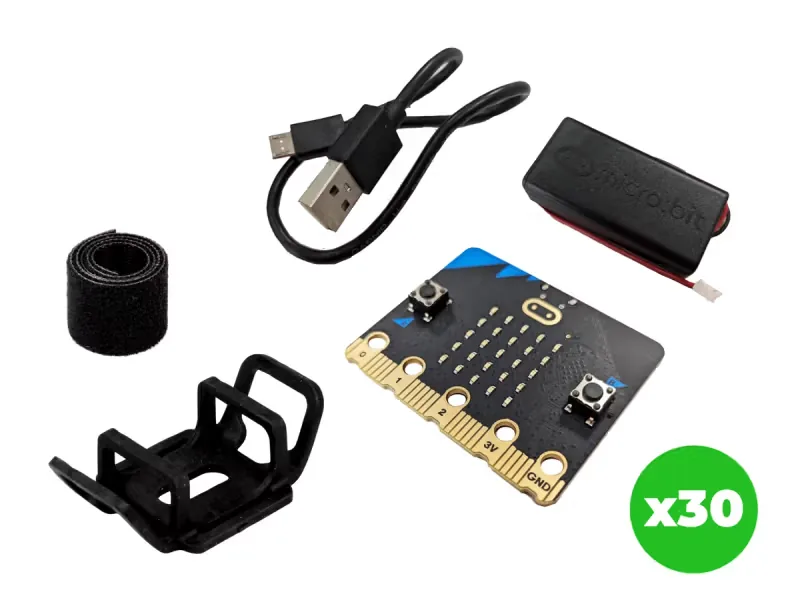
In the Foundation Phase, a floor robot such as Mai-Z, a robot mouse from 2Simple that learners code, is an optional next step once a class can give and follow instructions without one. In the Intermediate Phase, the BBC micro:bit bridges block-based and text-based coding: learners can program interactive stories, simple games or wearable art. Purple Mash keeps creativity at the centre, with animation, games and interactive stories in one place.
Python comes later. The micro:bit Python Editor is a good next step from about Grade 7, and even then, start with a text adventure or a simple art generator, not syntax drills.
Teachers don't need to become programmers
Teachers need to become confident guides for creative problem-solving. The technical skills can be learnt. Helping learners connect coding to their own interests and experiences is the real skill.
The strongest classrooms we see have teachers who tinker, treat mistakes as part of learning and see coding as a creative medium. So training should let teachers make something themselves first, such as their own interactive story or robot adventure. Once they have felt that, they teach it differently.
Our stories, our code
We won't sugarcoat it: infrastructure gaps, training needs and tight budgets are real. But our storytelling traditions are rich. Picture learners programming robots to act out African folktales, building interactive stories that keep our heritage alive, or coding games that teach a home language or local history.
The curriculum is a framework. The real work is helping learners see code as one more way to express their ideas and solve problems that matter to their communities. You don't need to be a programmer to help them. You need to be willing to learn alongside them.