Why we use PET felt in classrooms
Updated 3 min read
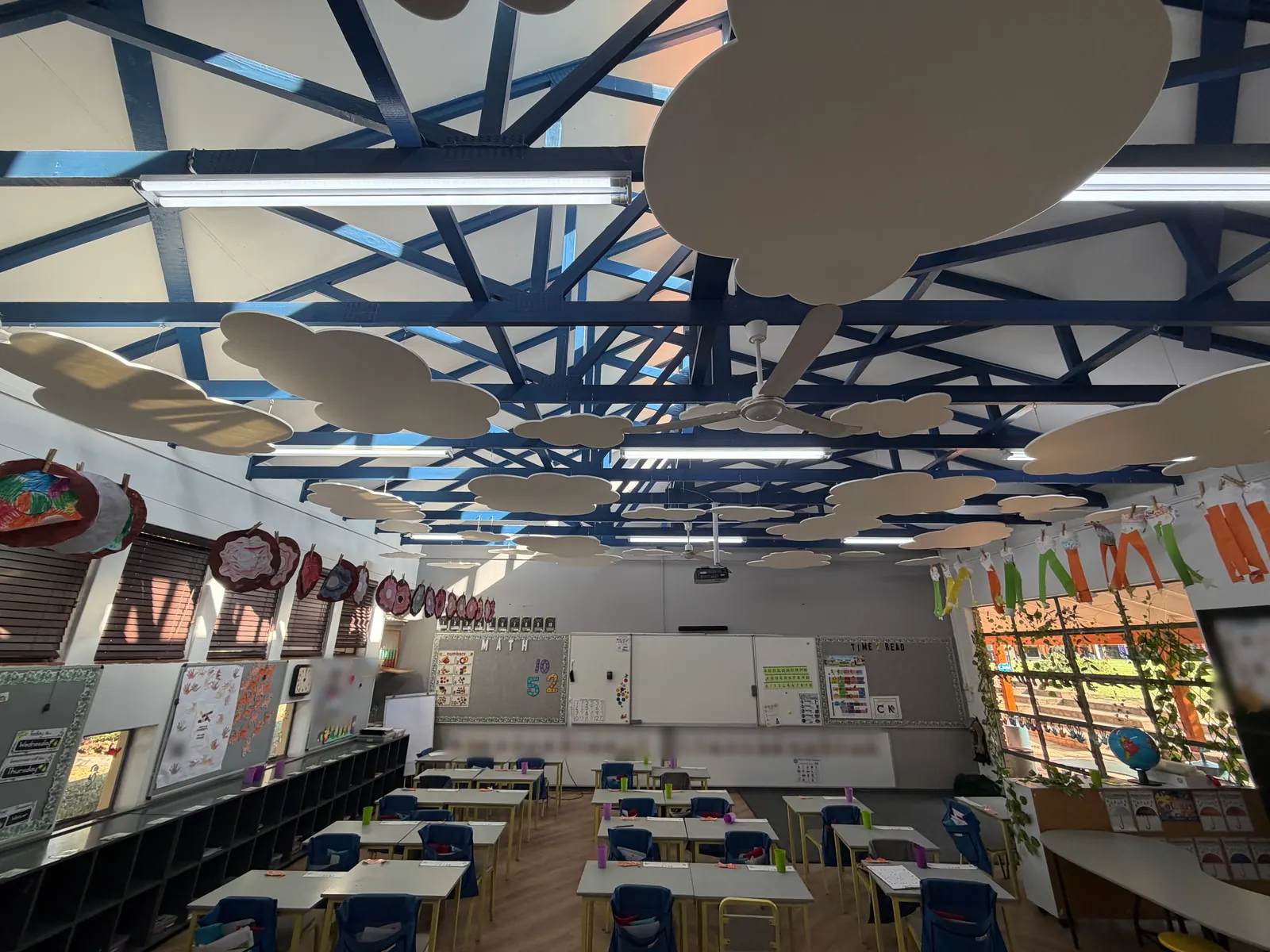
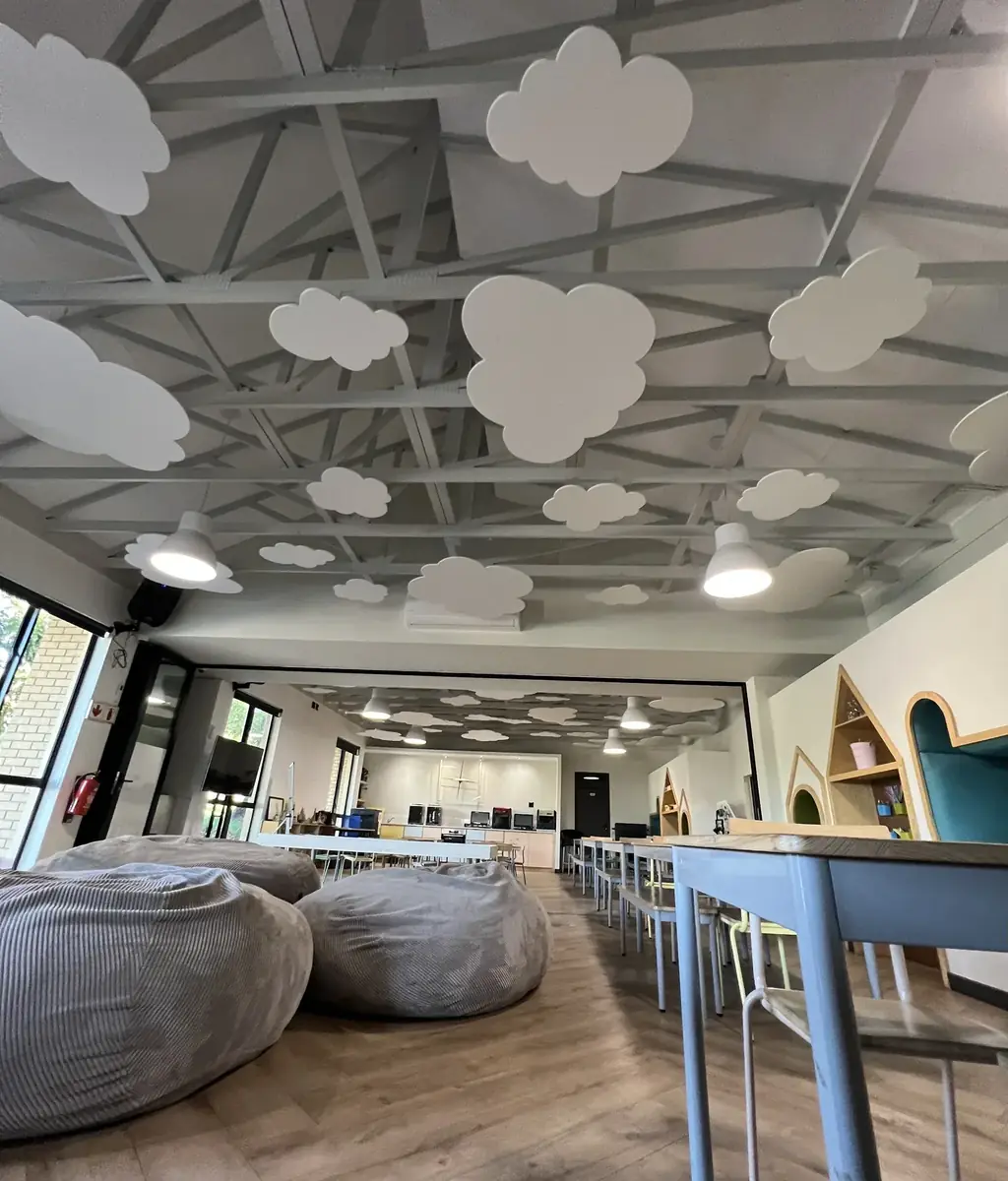
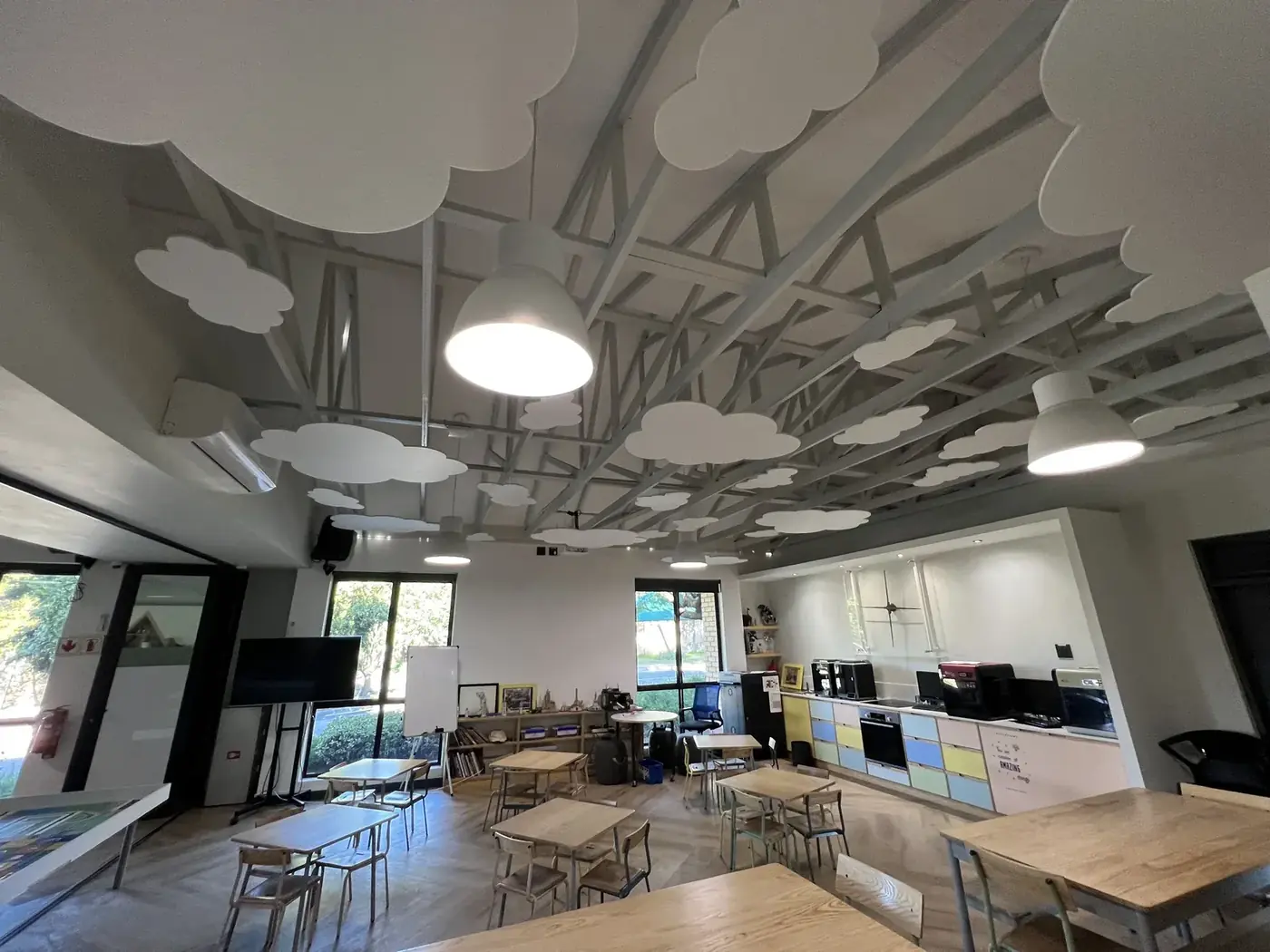
Look up in Classroom 1 at a Johannesburg school and you will see 43 white clouds hanging between the roof trusses. They are cut from PET felt, the felt we use for Sonic Hugs, our ceiling clouds and wall panels. This is what it is, why it calms a noisy room, and what to ask before anything goes up on a school ceiling.
What PET felt is
PET is short for polyethylene terephthalate. It is the plastic that polyester fibre is made from, and the plastic used for bottles of cooldrink, water and juice.
Felt is a non-woven fabric: the fibres are bonded together, not woven. Our supplier makes the felt we install from recycled PET plastic, with the fibres bonded by heat into a dense sheet that can be cut into clouds, circles, hexagons or a school's own shapes.
Our supplier's documents say no more than that: not what the plastic was before, nor where it was collected. So we make no claim about either.
Used PET bottles can be recycled into polyester fibre: Petco, the PET Recycling Company, describes how that works in South Africa.
Recycled content varies by maker: one lists 60% recycled PET in its panels, another at least 80%. Ask any supplier, us included, for the percentage.
Why it soaks up echo
When sound meets a surface, the Acoustical Society of America explains in its booklet for school designers, some of it bounces back, some passes through and some is turned into heat. Brick, plaster, tiles, glass and roof sheeting send most of it back, so sound lingers and words blur together.
Felt is porous: sound travels into the web of fibres and some of its energy is lost there as heat, instead of bouncing straight back. Our supplier adds that thicker felt, or an air gap behind it, helps with lower sounds too.
Felt calms the sound inside a room. It does not stop sound coming through a wall: as the same booklet puts it, good sound absorbers are not very good sound barriers.
Handling and care
The felt is lightweight, moisture-resistant and keeps its shape, our supplier says. Ask for the safety data sheet too: it says how to handle the product safely.
Dust settles on anything near a ceiling, so ask for the care instructions for your felt before you clean it. As a guide, one maker of polyester panels advises light, regular vacuuming and never a stiff brush.
Measured in a Johannesburg classroom
In September 2026 our installation partner measured Classroom 1 before and after its clouds went up: 13 large and 30 small, in white 12 mm PET felt, covering about 45% of the ceiling (the Form level). The echo dropped from almost a second to a little over half a second: about a third less.
For whoever signs off: averaged from 500 Hz to 4 kHz, the reverberation time fell from 0.92 seconds to 0.63 seconds. That took the room inside the 0.8 second limit the UK's school standard (BB93) sets for refurbished primary classrooms. By BB93's own measure (500 Hz to 2 kHz) it is 0.67 seconds, not yet the 0.6 for new classrooms.
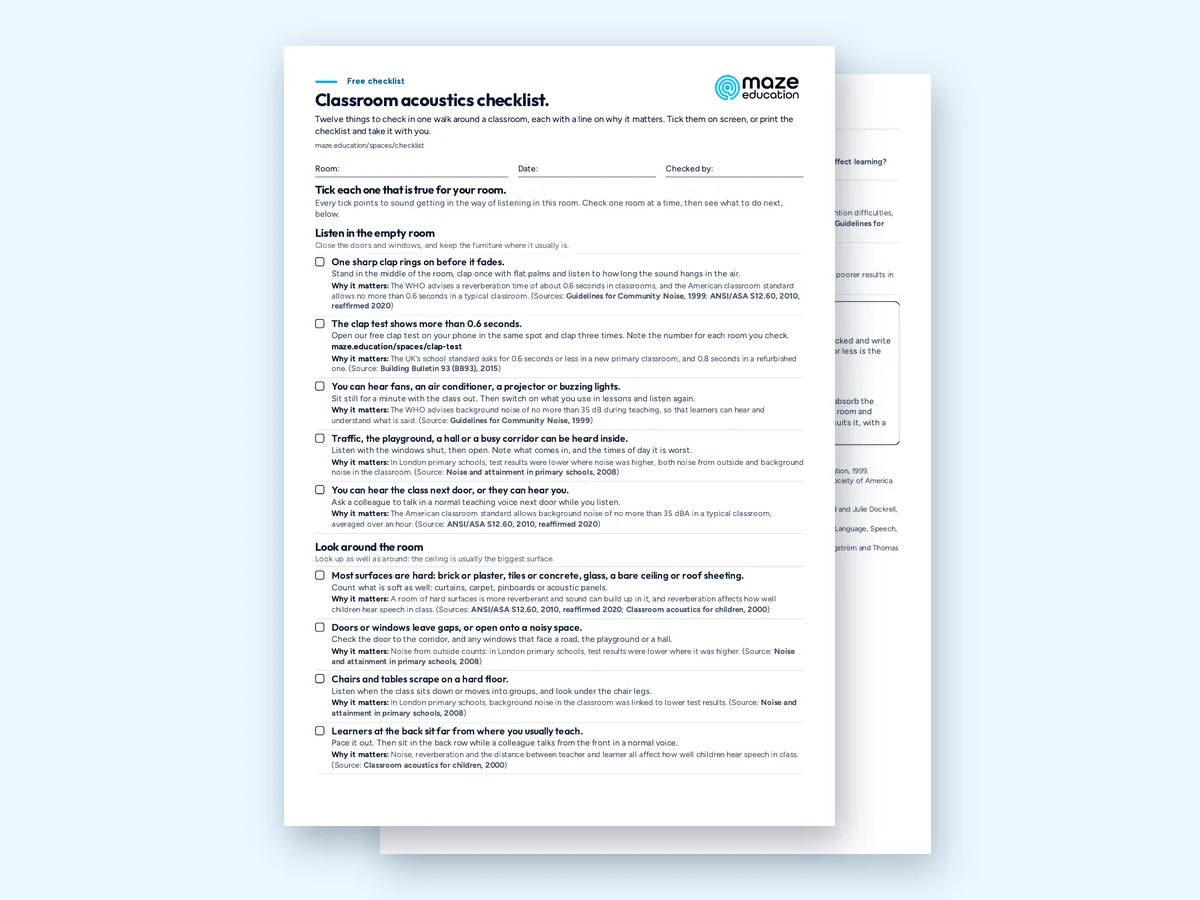
You can hear one clap before and after on our Spaces page, or check your own room with the clap test and our free classroom acoustics checklist.
Every room is different, so a site visit comes before a quote. On a site visit we measure each room and recommend the level of Sonic Hugs that suits it.