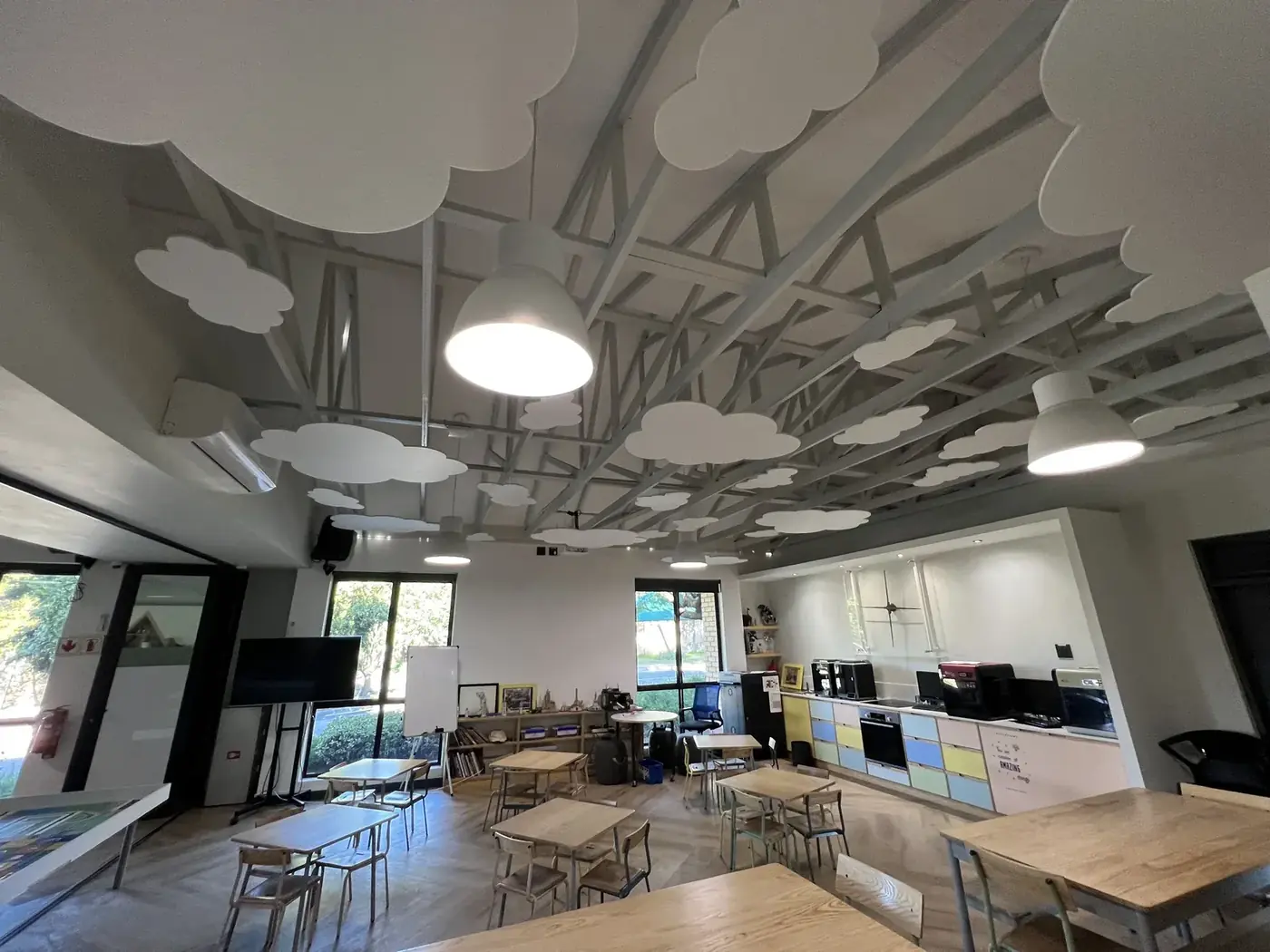
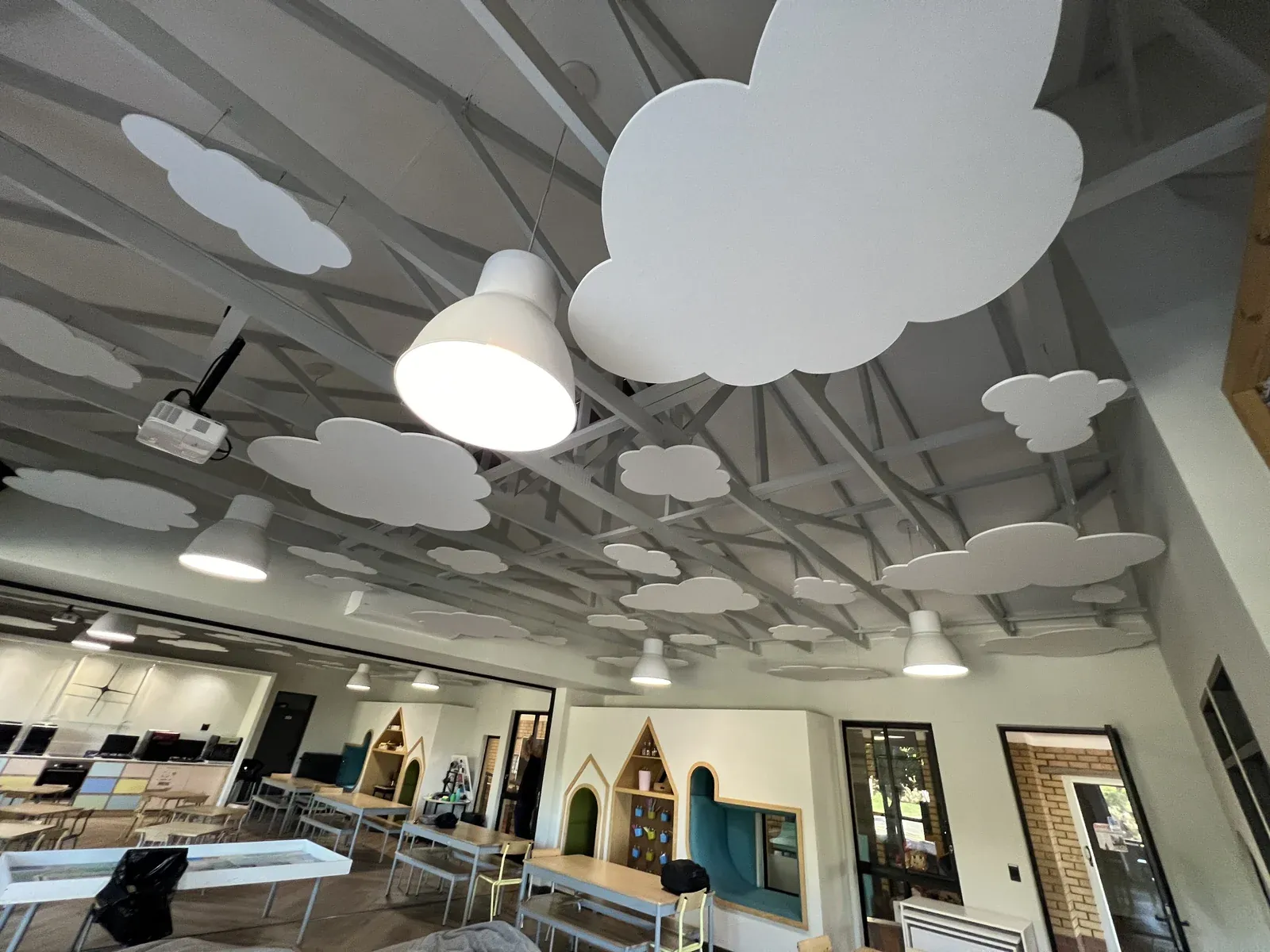
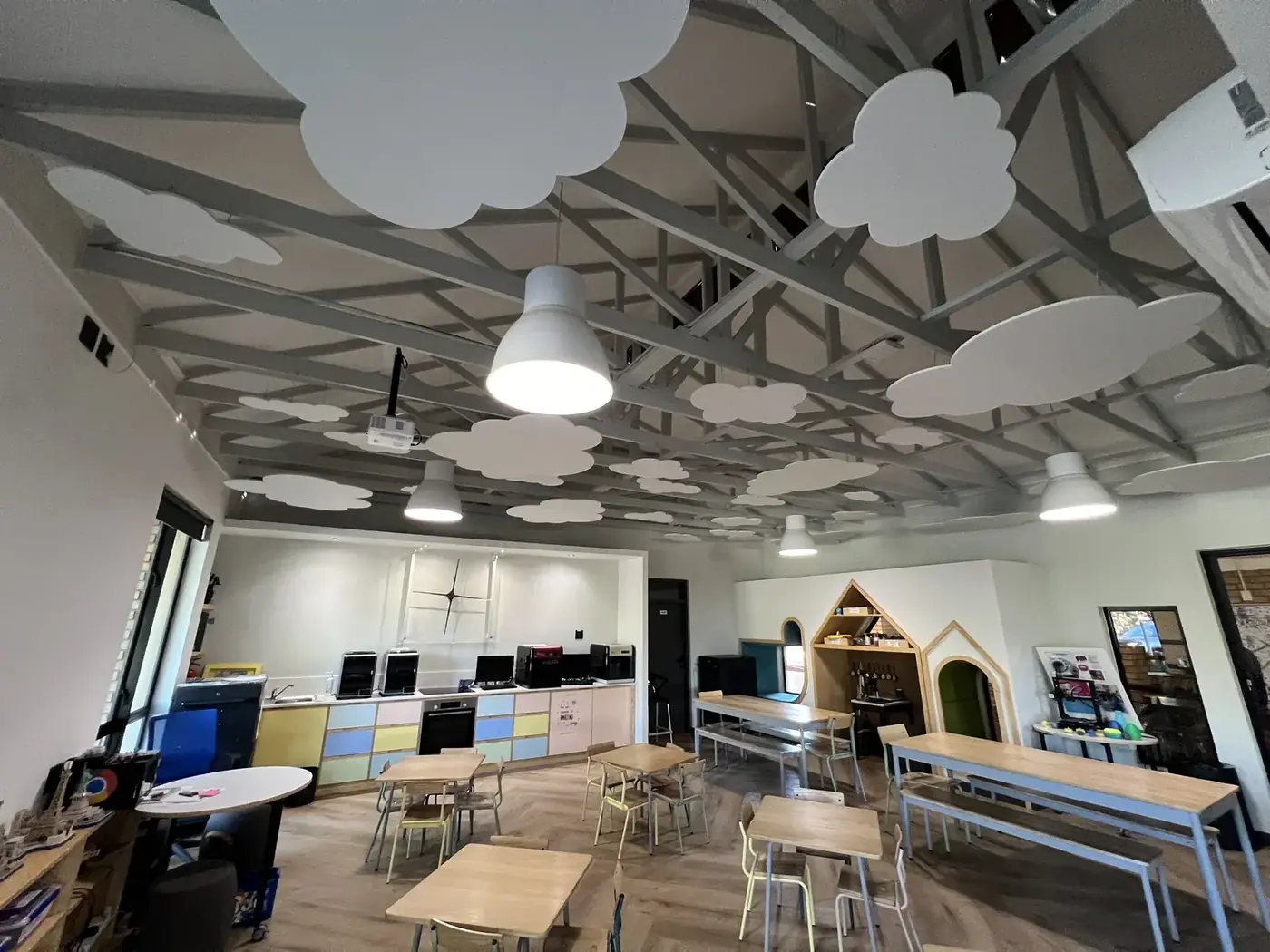
Same rooms, same clap: 32% less echo in Classroom 1, 38% less in the meeting room and about half in the learning hall, measured before and after.
With our installation partner we treated Classroom 1, the meeting room and the learning hall at a school in Johannesburg: felt clouds on the classroom ceiling and panels on the meeting room walls. Each room was measured before and after. The echo in Classroom 1 went from 0.92 to 0.63 seconds, in the meeting room from 0.97 to 0.60 seconds, and in the learning hall from 1.61 to 0.78 seconds.
Sound lingered in both rooms. One clap rang on for almost a second: 0.92 s in Classroom 1, a room of 8 m by 8 m, and 0.97 s in the meeting room, averaged across the pitches of the speaking voice (500 Hz to 4 kHz). The longer sound lingers, the more each word blurs into the next.
What we did
Our installation partner measured both rooms before installation: a hand clap, analysed with the standard method for working out echo time from a recording, at two positions in Classroom 1.
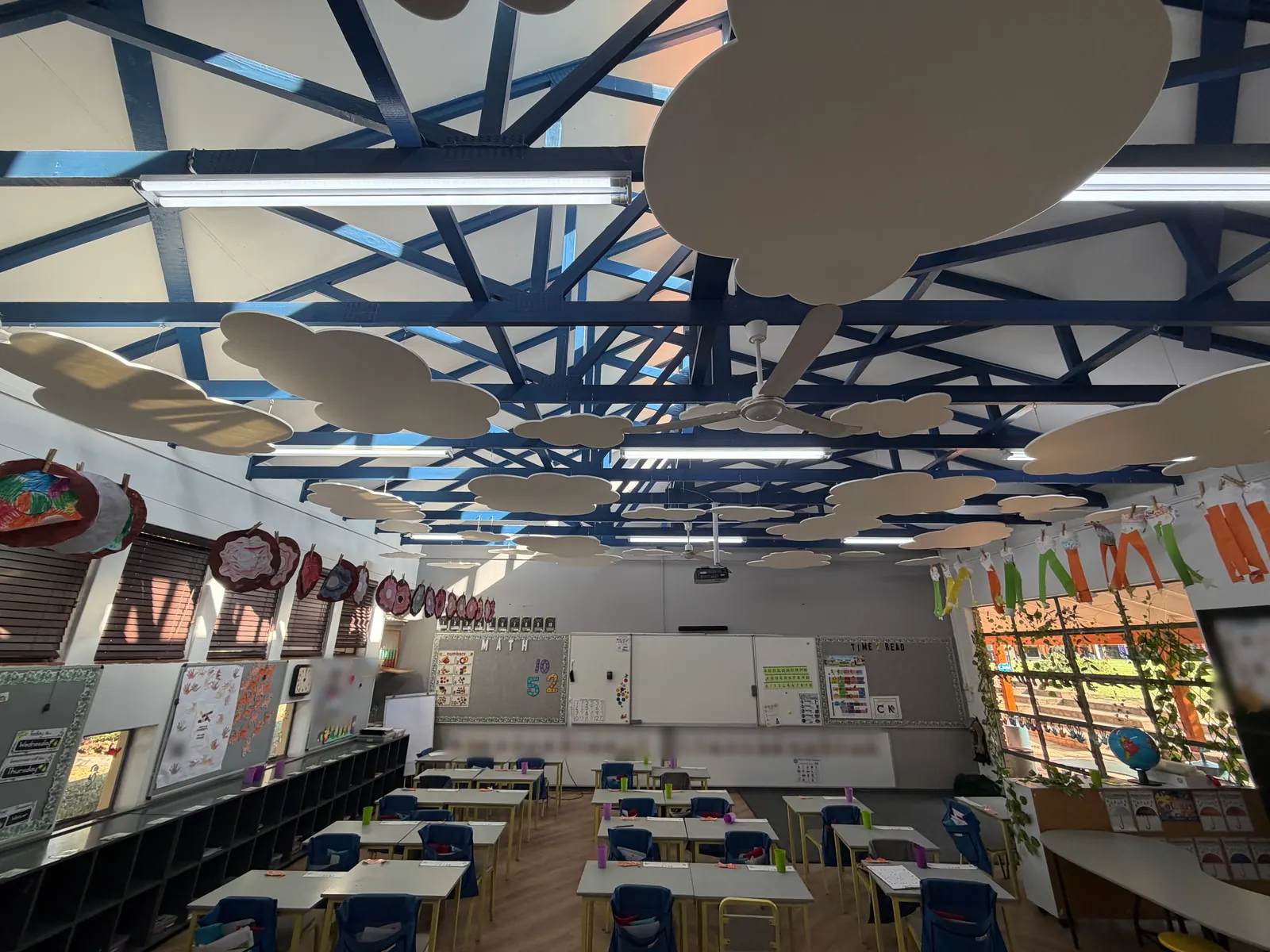
Classroom 1: Form level, 45% ceiling coverage. Felt clouds cut from white 12 mm PET felt, 13 large (1200 by 1200 mm) and 30 small (600 by 600 mm).
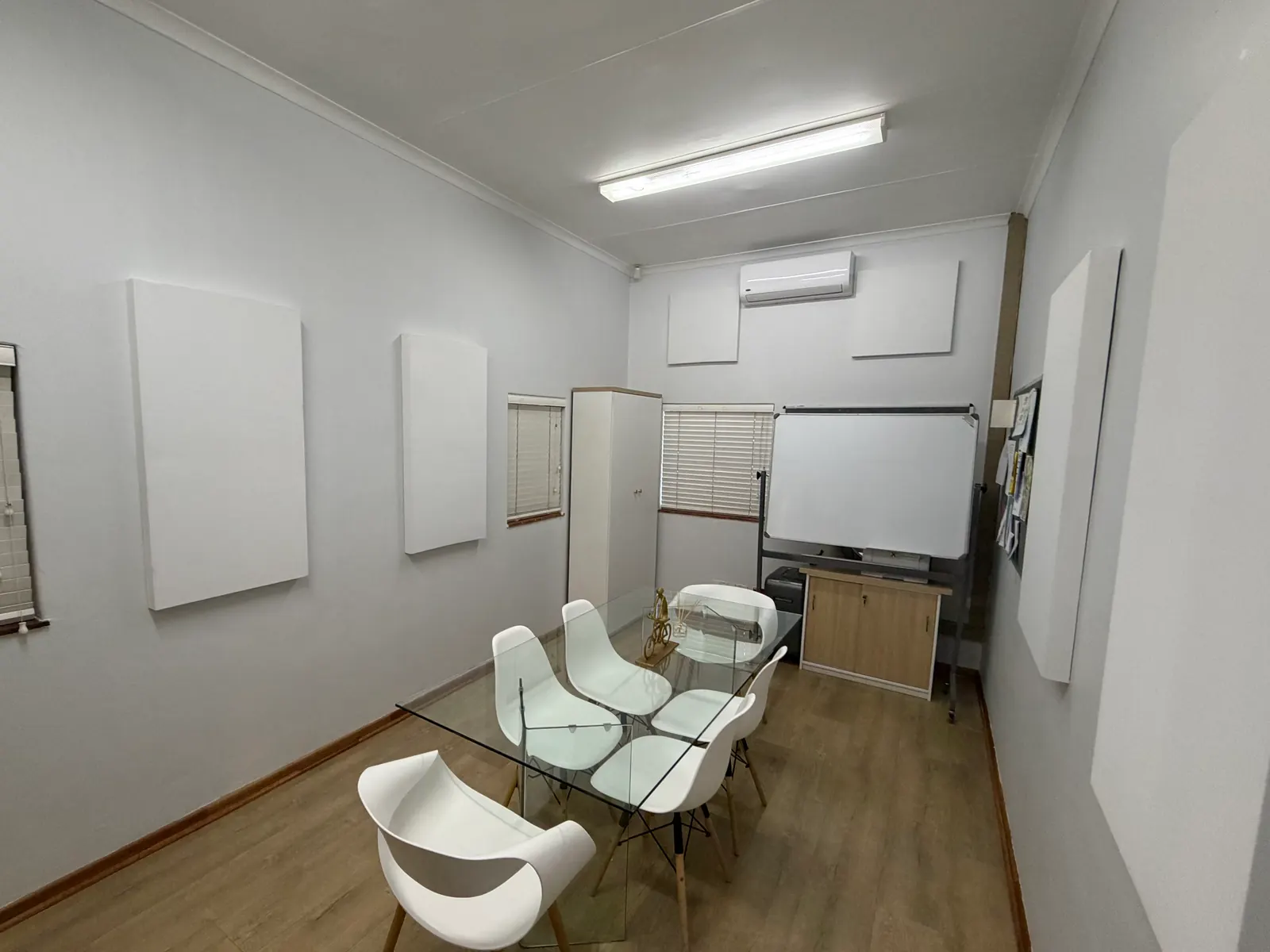
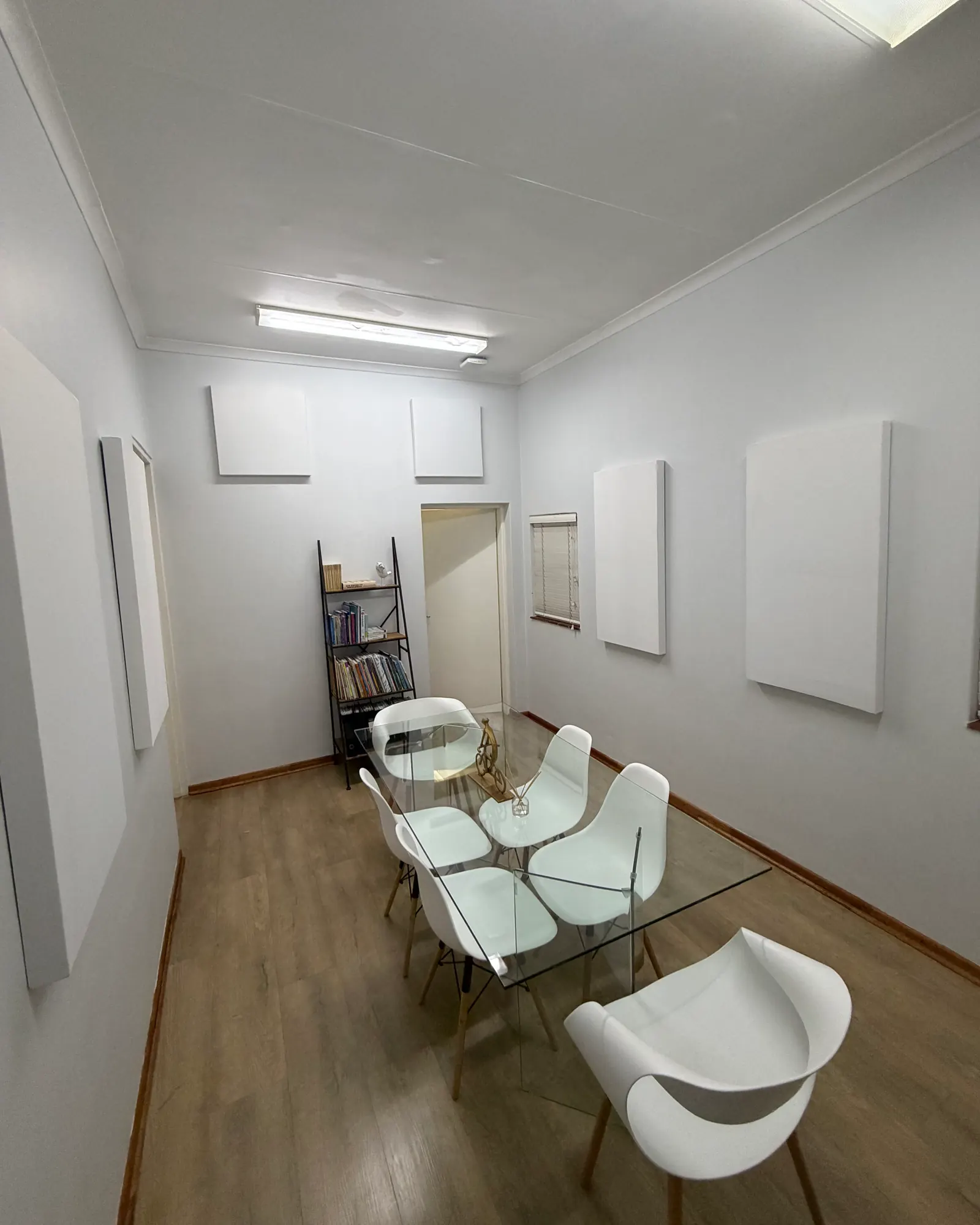
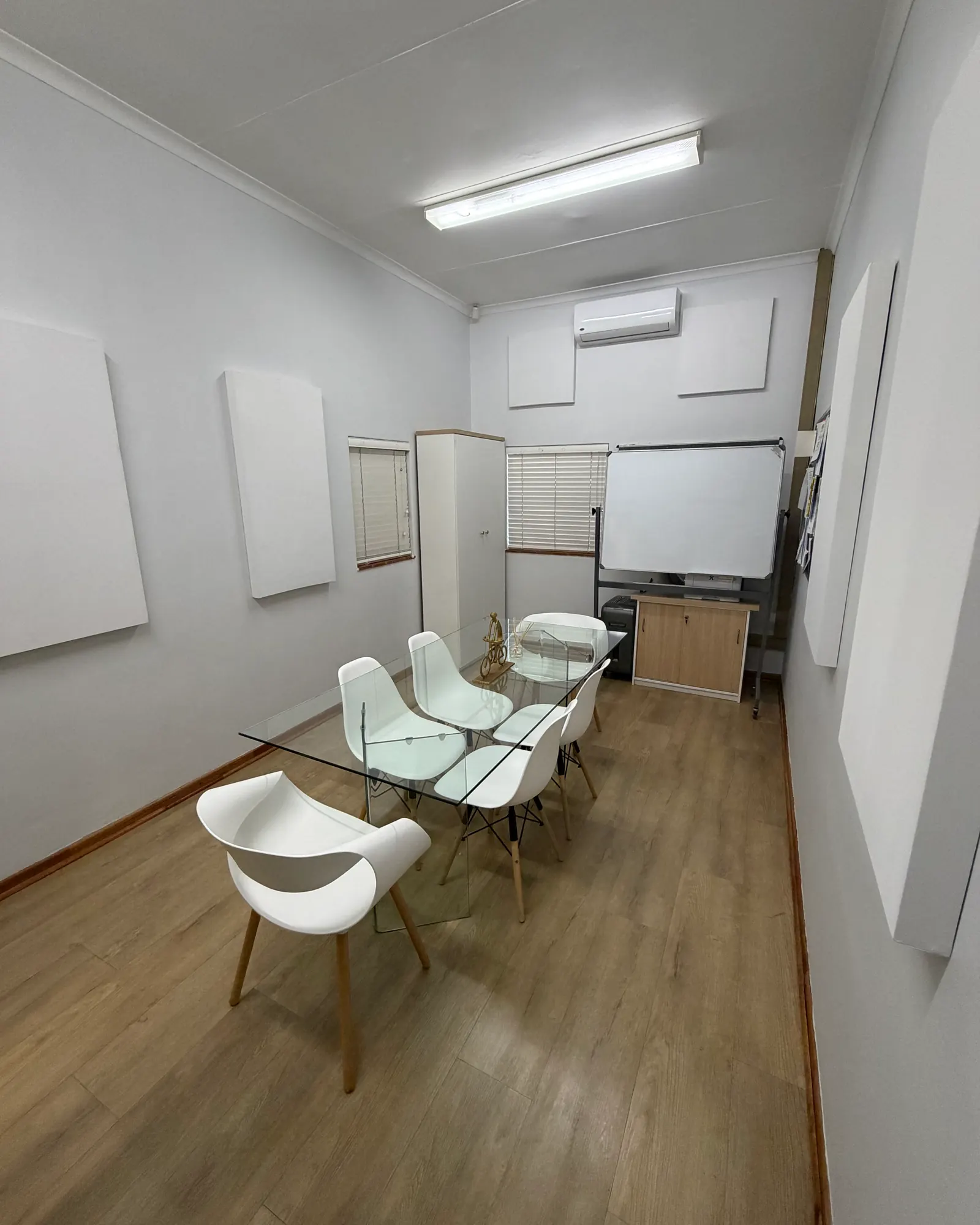
The meeting room: eight wall-mounted panels, four 1200 by 600 mm mineral wool panels (50 mm) and four 600 by 600 mm panels.
Both rooms were measured again after installation.
What changed
Classroom 1 went from 0.92 s to 0.63 s, 32% less echo, after 43 white felt clouds were hung over 45% of its ceiling. That figure averages four frequency bands. Across the three bands BB93 uses, the after figure is 0.67 s, below its 0.8 s refurbishment benchmark but above the 0.6 s new-build benchmark. The meeting room went from 0.97 s to 0.60 s, 38% less, with the biggest gains at 500 Hz and 1 kHz, where most of the energy in the spoken voice sits. These hand-clap estimates are not a formal compliance test against BB93.
Measured before and after.
Reverberation time (RT60) is how long sound takes to fade by 60 dB. The lower it is, the less a room echoes and the clearer speech is.
Classroom 1
8 m by 8 m (64 m²) · Form level, 45% ceiling coverage
Before0.92 s seconds
→
After0.63 s seconds
32%32%32% less echo0.29 s shorter
With 43 white felt clouds covering 45% of the ceiling, echo fell from 0.92 s to 0.63 s, 32% less. The report averages four frequencies from 500 Hz to 4 kHz. Across the three frequencies used by the UK's BB93 classroom standard, the after figure is 0.67 s: below its 0.8 s refurbishment benchmark, though above the 0.6 s new-build benchmark. This hand-clap estimate is not a formal compliance test.
By frequency
BeforeAfter
500 Hz
1 kHz
2 kHz
4 kHz
Dashed lines show BB93's 0.8 s refurbishment and 0.6 s new-build benchmarks for primary classrooms. BB93 compares the average of 500 Hz, 1 kHz and 2 kHz, not each band on its own; this chart and hand-clap estimate do not prove compliance.
What we installed: Felt clouds cut from white 12 mm PET felt: 13 large (1200 by 1200 mm) and 30 small (600 by 600 mm).
Reverberation time in Classroom 1, in seconds
Frequency
Before
After
Change
500 Hz
0.97
0.73
0.24 s shorter, 25% less
1 kHz
0.96
0.68
0.28 s shorter, 29% less
2 kHz
0.92
0.59
0.33 s shorter, 36% less
4 kHz
0.83
0.52
0.31 s shorter, 37% less
Average, 500 Hz to 4 kHz
0.92
0.63
0.29 s shorter, 32% less
Meeting room
Wall-mounted panels
Before0.97 s seconds
→
After0.60 s seconds
38%38%38% less echo0.37 s shorter
Down to 0.60 s, with the biggest gains at 500 Hz and 1 kHz, where most of the energy in the spoken voice sits.
By frequency
BeforeAfter
500 Hz
1 kHz
2 kHz
4 kHz
Dashed lines show BB93's 0.8 s refurbishment and 0.6 s new-build benchmarks for primary classrooms. BB93 compares the average of 500 Hz, 1 kHz and 2 kHz, not each band on its own; this chart and hand-clap estimate do not prove compliance.
What we installed: Eight wall-mounted panels: four 1200 by 600 mm mineral wool panels (50 mm) and four 600 by 600 mm panels.
Reverberation time in Meeting room, in seconds
Frequency
Before
After
Change
500 Hz
0.98
0.57
0.41 s shorter, 42% less
1 kHz
1.01
0.58
0.43 s shorter, 43% less
2 kHz
0.96
0.65
0.31 s shorter, 32% less
4 kHz
0.91
0.59
0.32 s shorter, 35% less
Average, 500 Hz to 4 kHz
0.97
0.60
0.37 s shorter, 38% less
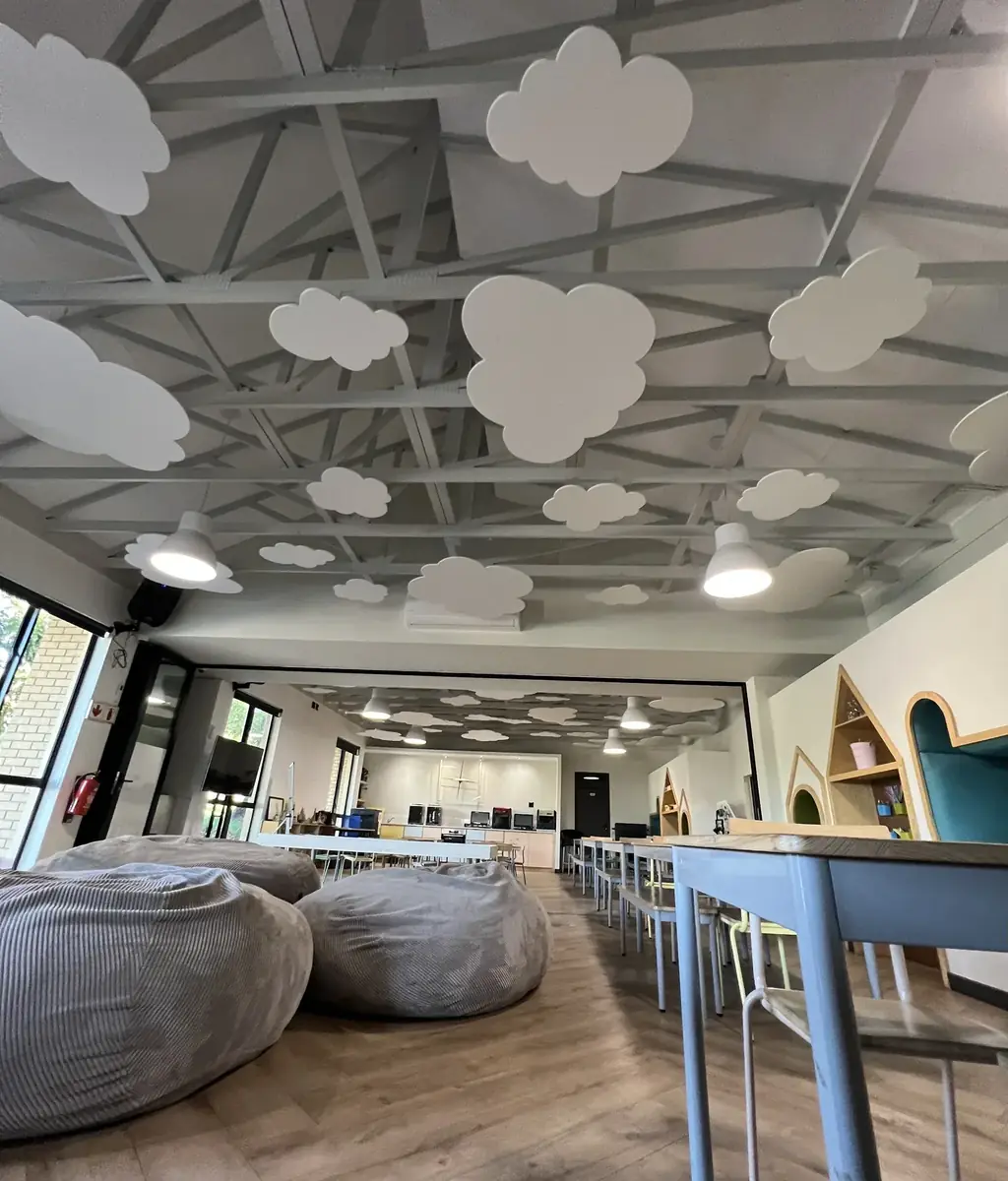
The school's learning hall, a hall-like space of 128 m² treated at Still level (35% coverage), went from 1.61 s to 0.78 s.
Measured by our installation partner in September 2026: a hand clap in each room, analysed to estimate echo time from a recording (at two positions in Classroom 1). RT60 is the time sound takes to fade by 60 dB; each reported average covers 500 Hz to 4 kHz. BB93 compares 500 Hz, 1 kHz and 2 kHz in a finished, furnished but unoccupied room. These recordings have not been established as a formal BB93 compliance test.
Photos from the school
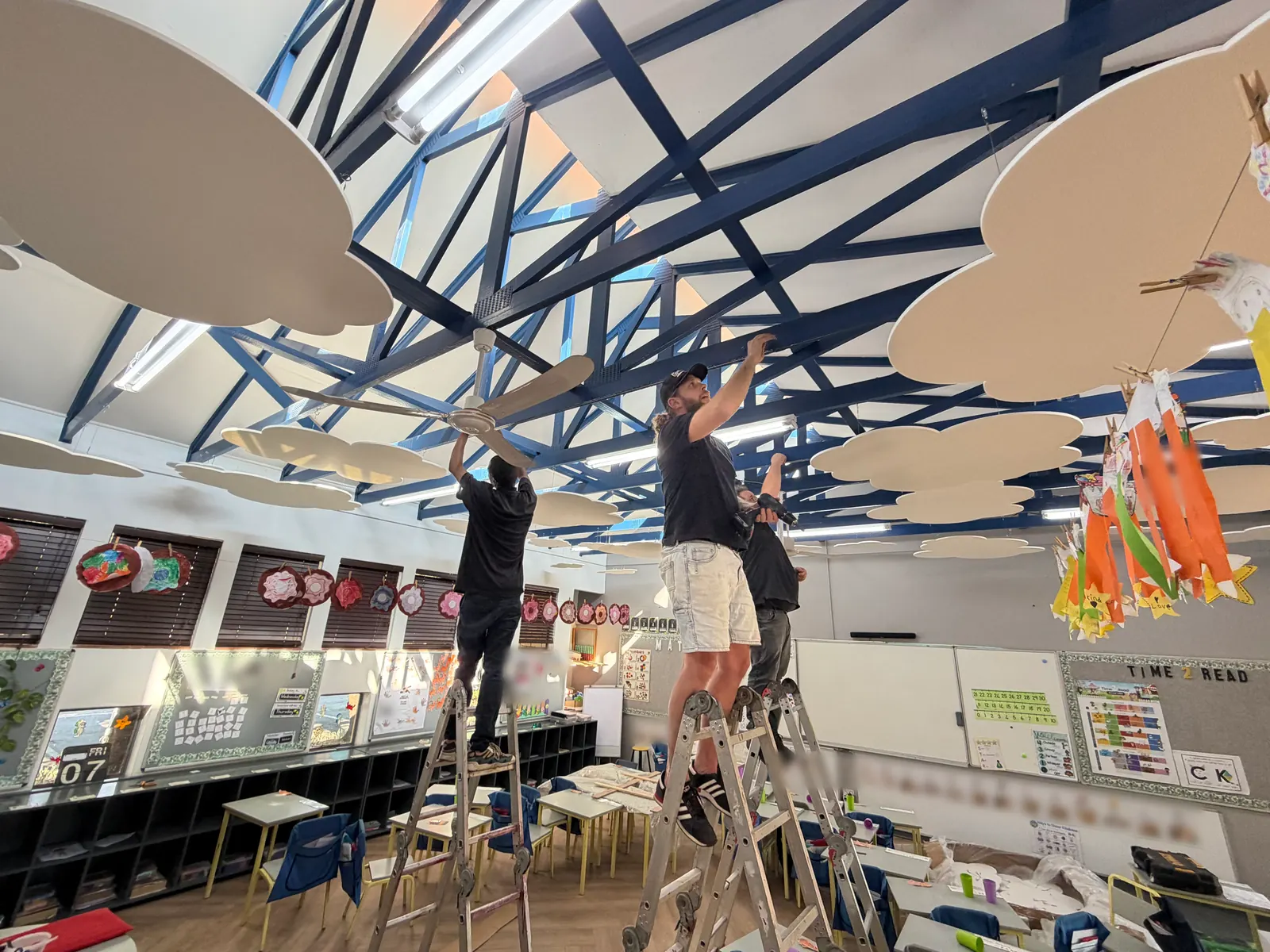
Installing the clouds in Classroom 1
Classroom 1: 13 large and 30 small felt clouds
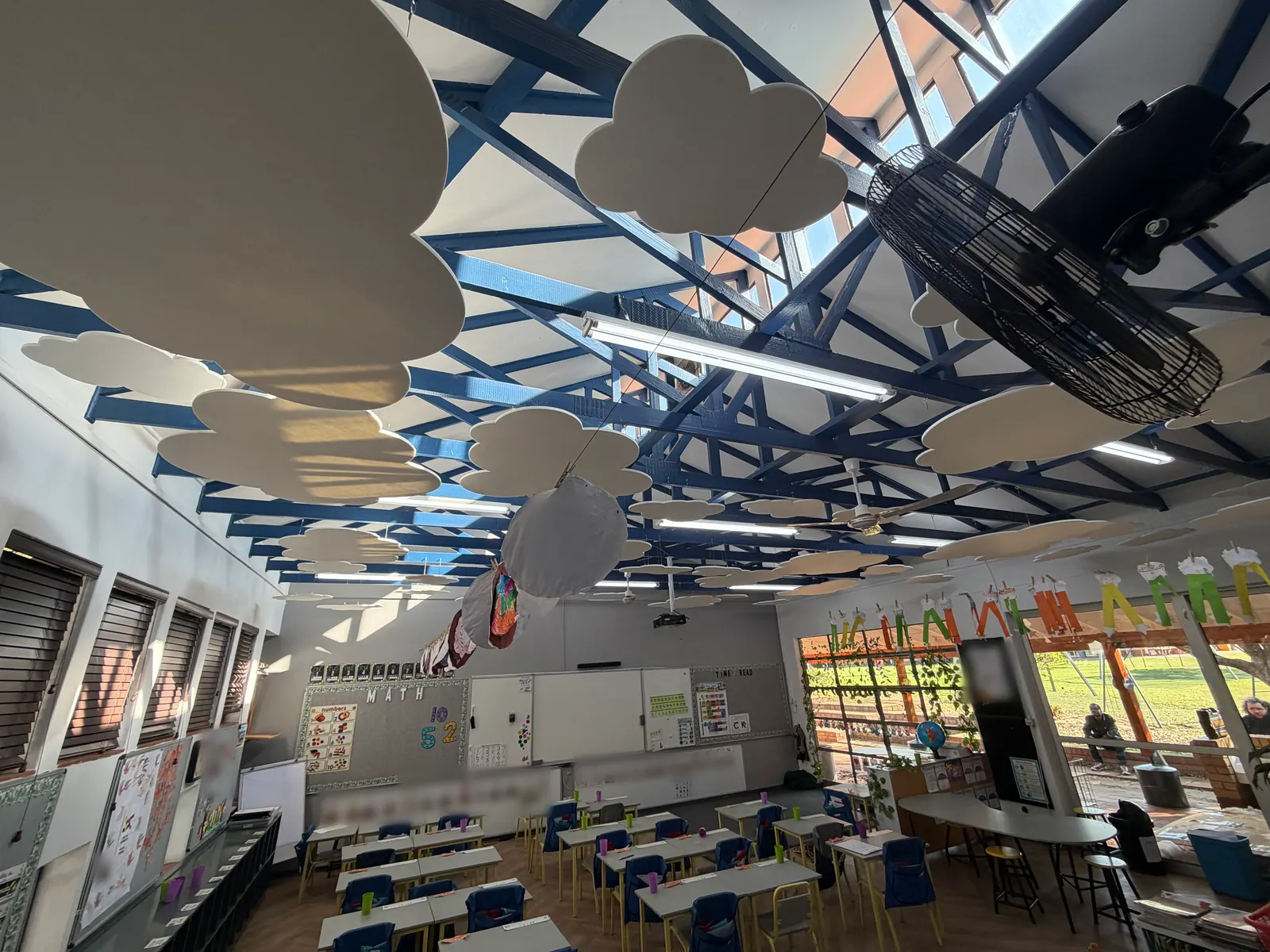
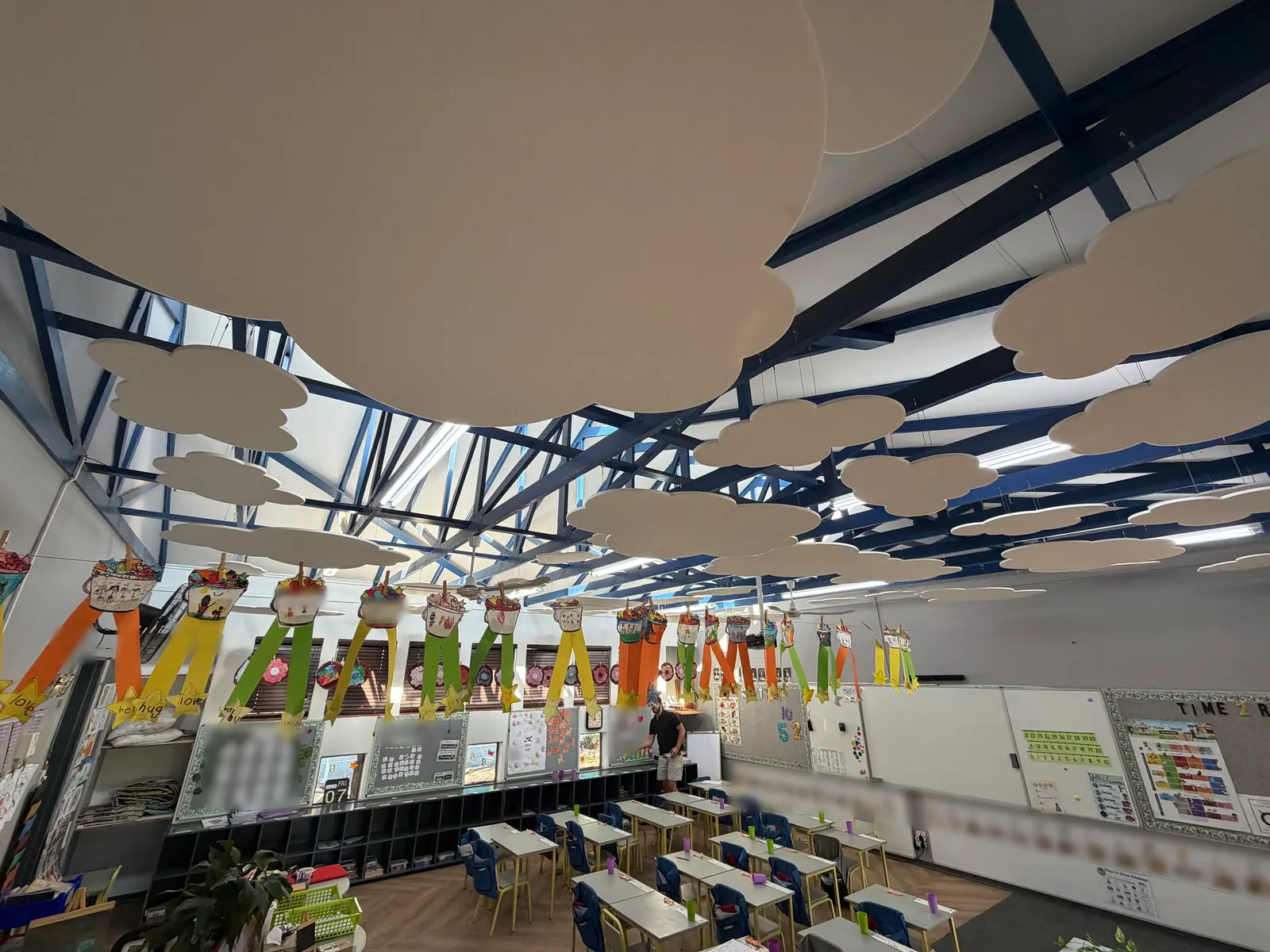
The clouds hang above the class's own artwork
The meeting room: eight wall panels
The meeting room, looking towards the door
Mineral wool panels on the meeting room walls
The learning hall: a hall-like learning space
The learning hall: felt clouds over about 35% of the ceiling, the light level we call Still